Omi Coast
Jomon Culture and a Jade Coast
Carrying jade down from the mountains, the Omigawa River and the Himekawa River flank either side of this coast. Geology enthusiasts will find the pebble beach here perfect for finding not only jade, but a great variety of interesting rock specimens.
The Jomon (14,000 – 400 BCE) people who lived in the huts found at the Teraji Archaeological Site (A National Historical Landmark) gathered jade along this coast and, working it into various forms, became, along with the people of the Chojagahara Archaeological Site, the first jade culture in the world. From these ruins have been excavated things such as raw jade and unfinished jade beads, verifying the existence of jade workshops in the area. Now the area has been turned into a historic park, with a restored Jomon-era house landscaped with Jomon period trees and shrubs. Materials excavated from the ruins are on display in the Omi Natural History Museum. Here at the Omi Coast Geosite you can experience both Jomon period history and jade hunting.
At Suzawa Seaside Park, you and your family can enjoy a variety of recreational facilities including a 40 meter slide, a large lawn, street basketball court, skateboard park, and an 18-hole putter golf course. Afterward you can enjoy the sunset as it bathes the sea in its crimson glow.
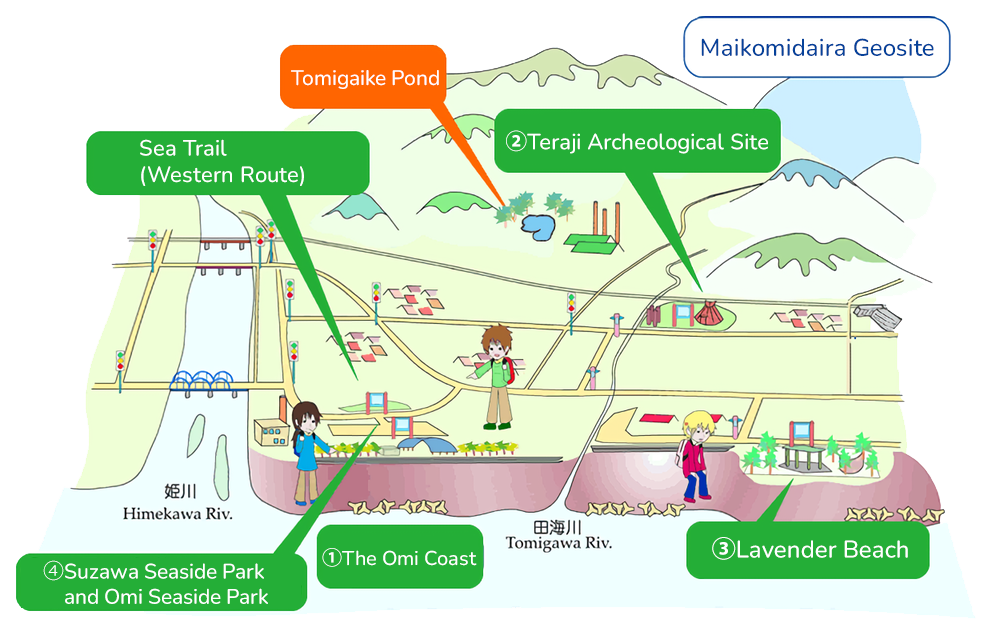
1The Omi Coast
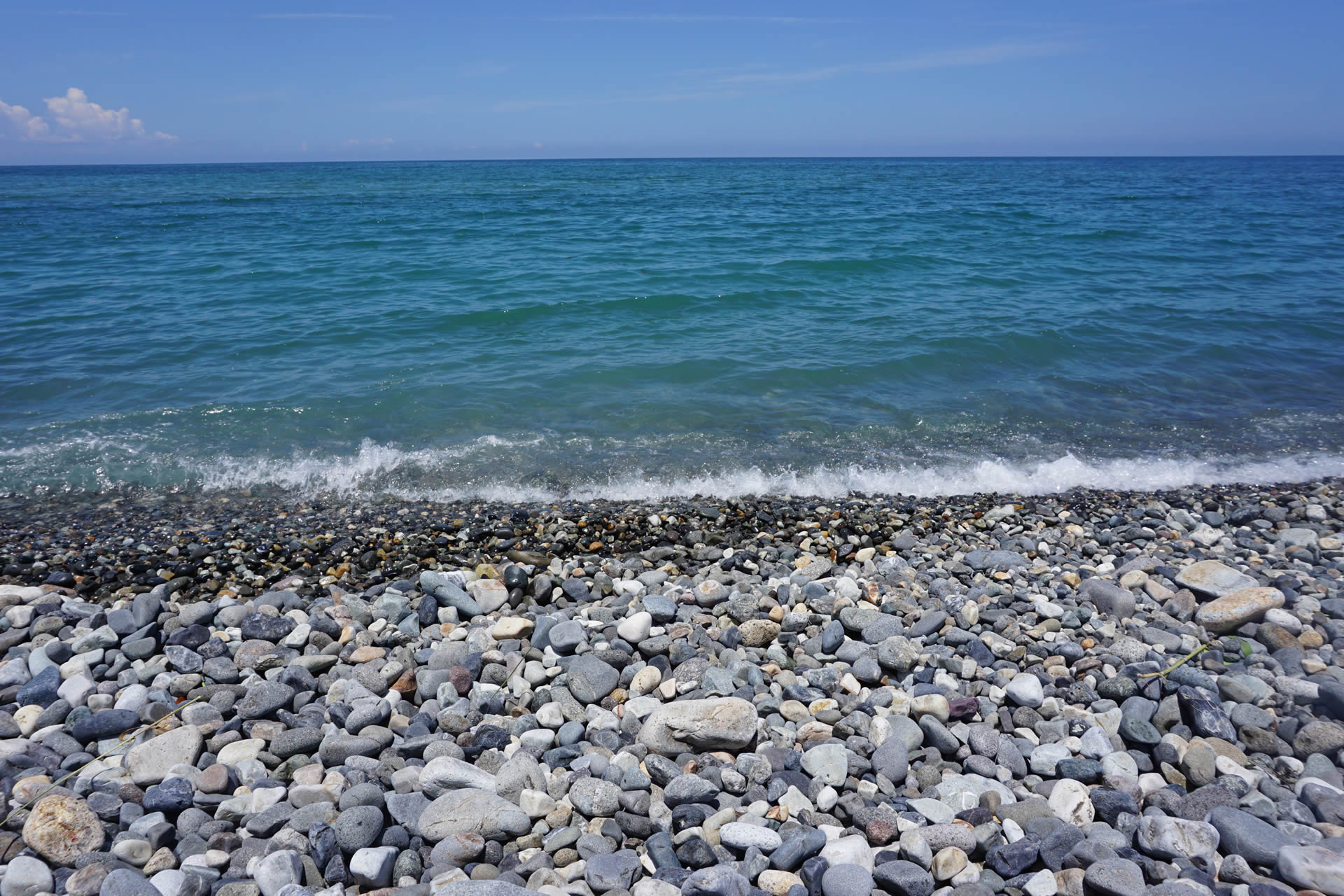
The Omi Coast stretches between the jade-producing Himekawa and Omi Rivers. The swift currents carry jade to the coast along with a staggering variety of stones of all shapes, colors and sizes. Naturally polished by the river currents and waves, these stones make the Omi Coast a perfect place to study the many stones of the Itoigawa Geopark.
2Teraji Archeological Site
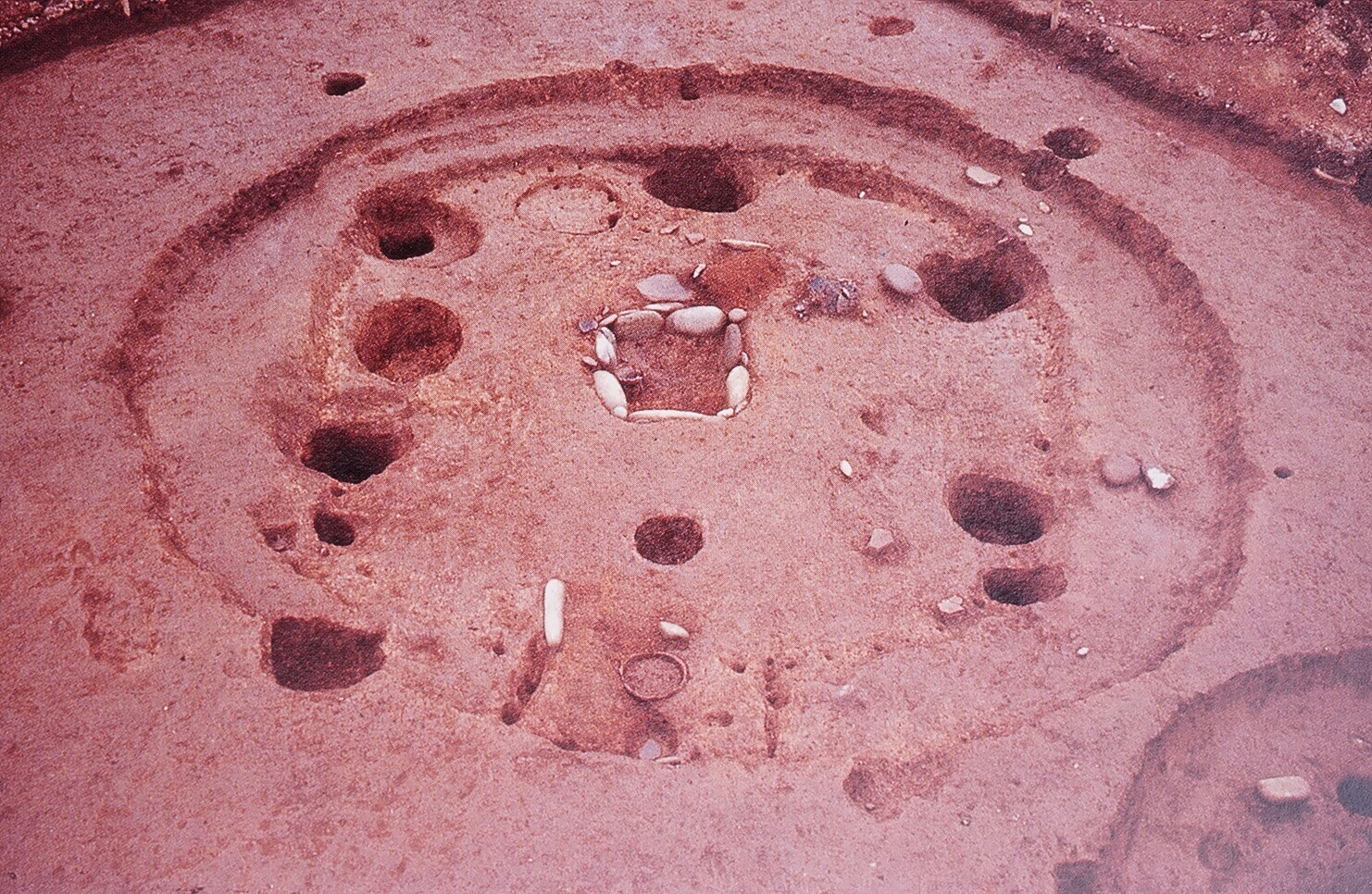
Excavated Pit Dwelling
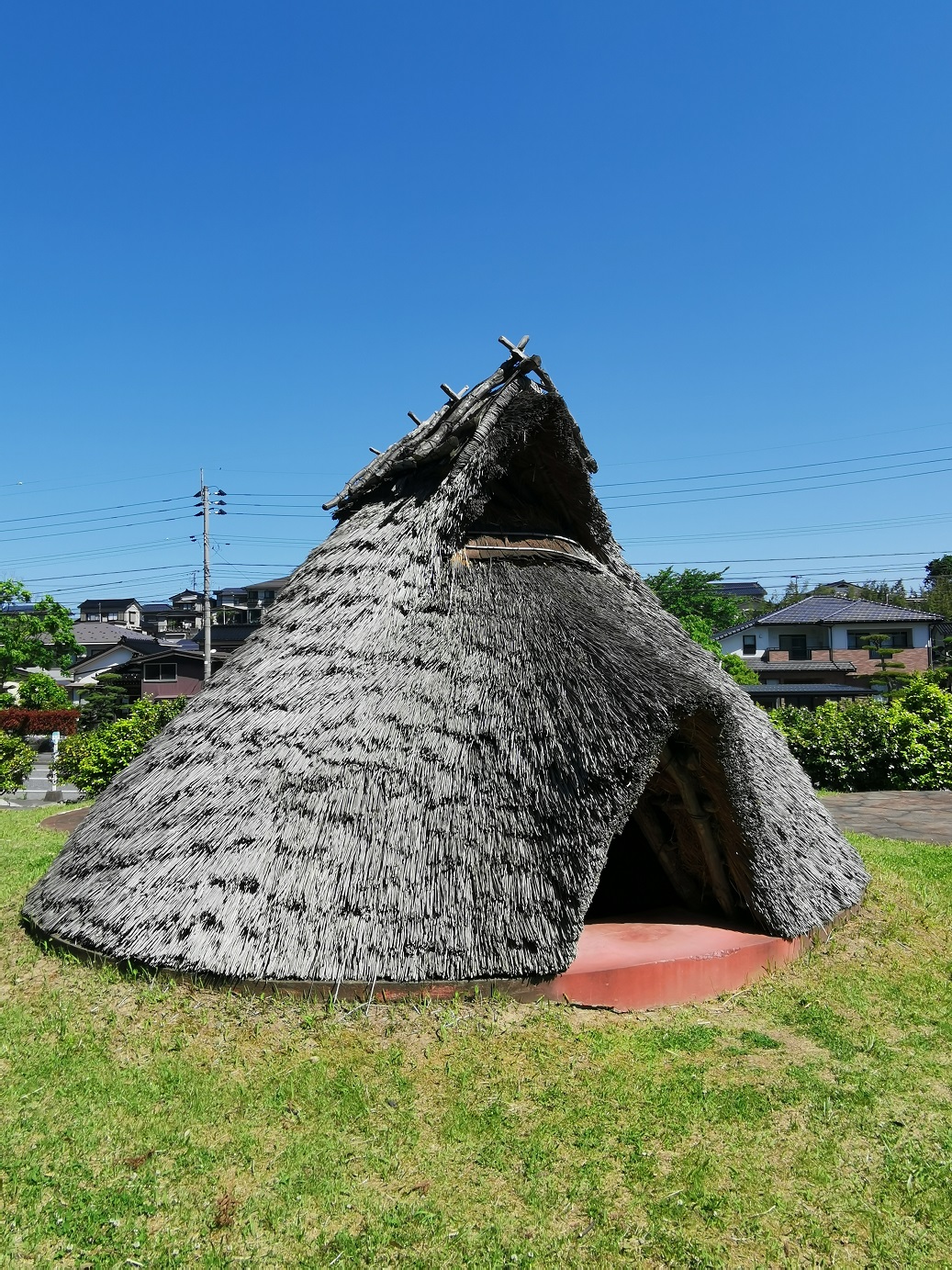
Reconstructed Pit Dwelling
The site of a Jomon village that existed from the Middle to Final Jomon Periods. In the excavated dwellings were found a large number of jadeite samples and jade beads in various stages of completion, indicating that this village once was a manufacturing center for jade jewelry. One of the pit dwellings has been reconstructed and Jomon Era plants have been reintroduced and the site is now an archeological park.
In addition to jade, stone tools and fragments of pottery and bone have been unearthed at this site.
3Lavender Beach
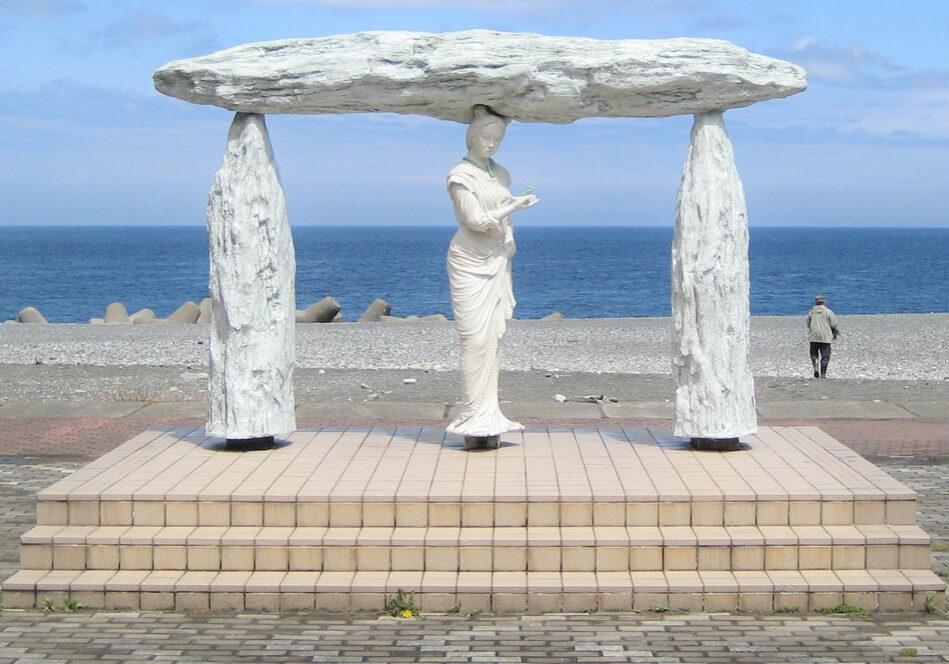
This beach is named for the lavender-colored jade that can occasionally be found among its pebbles. An expansive shoreline covered with a large variety of stones, Lavender Beach is an excellent spot to hunt for jade and other mineral specimens.
4Suzawa Seaside Park and Omi Seaside Park
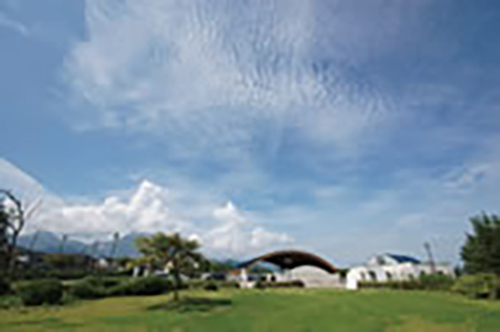
Suzawa Seaside Park features a number of recreational facilities including playground equipment, a putter golf course, and a 40m long slide, offering a number of ways to relax and play with friends and family.
The neighboring Omi Seaside Park features open grass lawns, a dome-covered rest area, barbecue pits, and other facilities.
5Tomigaike Pond
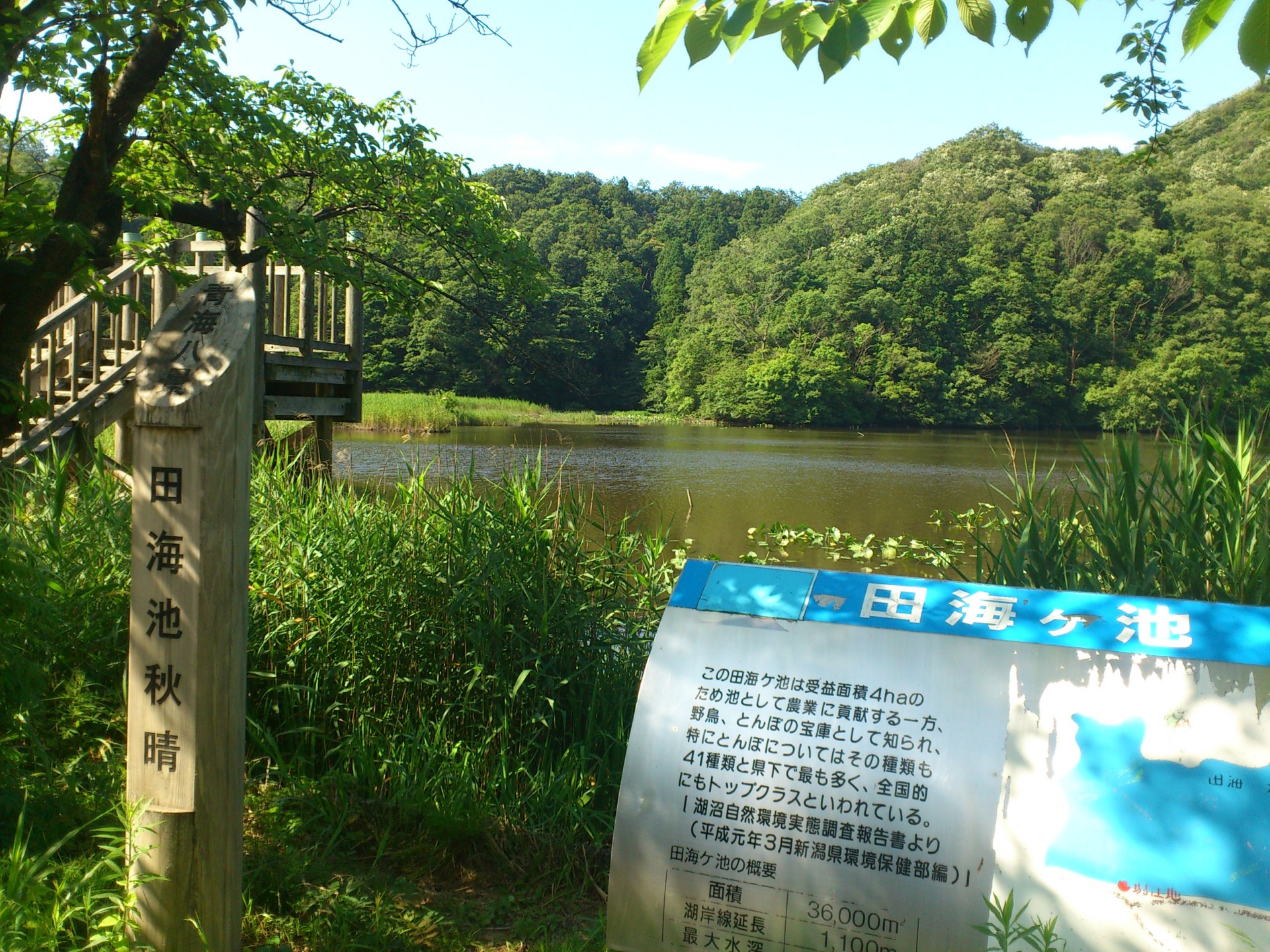
Nestled against the mountains, this small spring-fed pond is a haven for local water plants and wildlife, especially dragonflies. A study in 2016 confirmed more than 40 species at this “Dragonfly Treasure House.”
Area Access & Closures
No alerts.


