About Itoigawa Geopark
Itoigawa UNESCO Global Geopark
Discover the Birthplace of the Japanese Islands &
One of the World's Oldest Jade Cultures
Welcome to Itoigawa UNESCO Global Geopark. Encompassing the entire city of Itoigawa, we made history in 2009 by becoming the first region in Japan to be recognized as a Global Geopark. Here, the story of the Japanese Archipelago is written not only in the rocks and landscapes, but also in the culture and traditions of the people who call this dynamic landscape home.
Itoigawa sits directly atop the Itoigawa-Shizuoka Tectonic Line, a massive fault that splits Japan between East and West. This is where the Eurasian and North American continental plates collide, thrusting the massive Japanese Alps into the sky.
This region also marks the western boundary of the Fossa Magna, a massive geological rift which formed nearly 20 million years ago as the Japanese Islands separated from the Asian Continent.
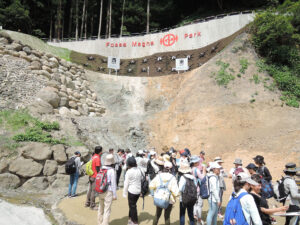
Itoigawa-Shizuoka Tectonic Line at Fossa Magna Park
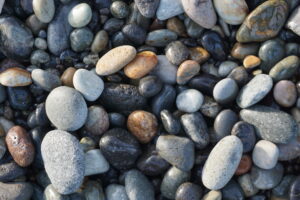
Pebbles on the Itoigawa Jade Coast
The intersection of these tectonic forces has gifted Itoigawa with exceptional geological diversity. The area's many pebble beaches are natural treasure chests, filled with stones born from fire, from water and from the Earth's awesome power.
Igneous rocks like andesite and granite; sedimentary rocks like sandstone and limestone; metamorphic rocks like serpentine and schiss―the dazzling variety of stones has earned Itoigawa the nicknames "Stone Town" and "Japan's #1 Pebble Town."
Among these many stones, by far the most famous is Itoigawa's jade. Home to the largest and highest quality jadeite deposits in Northeast Asia, jade has been gathered and used in Itoigawa since the Jōmon Period, over 6,000 years ago, making Itoigawa the birthplace of one of the world's oldest jade-working civilizations.
Today, Itoigawa's jade can be enjoyed in its natural setting at the Kotakigawa and Omigawa Jade Gorges, along the pebble beaches of the Itoigawa Jade Coast, or at the Fossa Magna Museum.
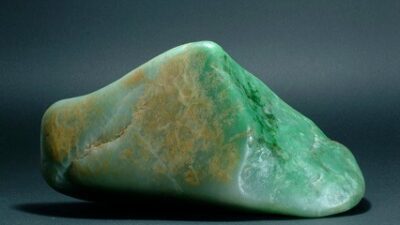
Itoigawa Jade
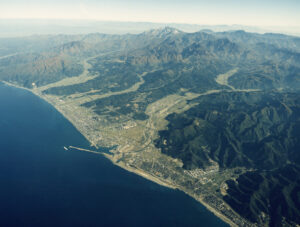
Itoigawa's "Seven Valleys" along the Coast
In ancient times, this region was colloquially known as Nishihama Nanatani, meaning 'Seven Valleys of the Western Coast.'
This rugged topography of valleys and gorges carved into the mountains along the Sea of Japan has fostered incredible biodiversity, with over 200 rare species of plants and animals identified in Itoigawa, including some (like the Murayama-maimai snail) that have only been discovered here!
Itoigawa's location and the surrounding topography made it an important trading hub in ancient times. Sitting on the intersection of the Matsumoto Road, Kaga Road and the Kitamaebune shipping route, the constant flow of goods and people nurtured rich cultural heritage and traditions that continue to be passed down to this day.
The Sai-no-Kami bonfires of winter, the Grand Festivals of spring, the bon-odori dances and fireworks of summer and harvest festivals of autumn―each season is marked by festivals and ceremonies with centuries of history.

Ryō'ō-no-Mai Dance of Nou Hakusan Shrine
The story of our planet is not a quiet one—it is a living, breathing adventure waiting to be explored. Whether you are hoping to spot jade on a rocky shore, straddling a continental fault line, or even enjoying the bounty of our land and sea, every experience in Itoigawa brings you in closer communion with the Earth.
Are you ready?
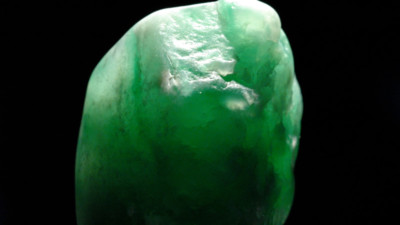
Jade: Japan's National Stone
Learn more about this beautiful stone and its connection to the people of Itoigawa and Japan.
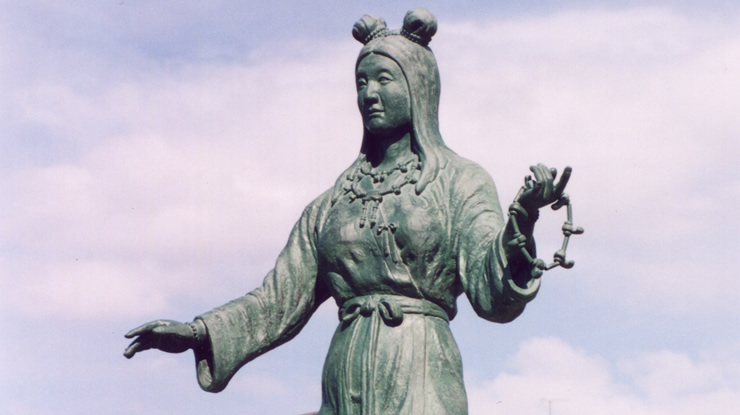
Itoigawa's Ancient History & Culture
From the world's oldest jadeworking culture to Japan's most ancient historic documents, discover our story.
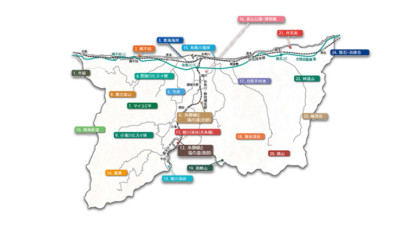
The 24 Areas of Itoigawa Geopark
Explore Itoigawa Geopark for yourself by visiting our 24 thematic areas.

Management & Guiding Principles of the Geopark
Learn how and why we are operating and promoting Itoigawa Geopark.
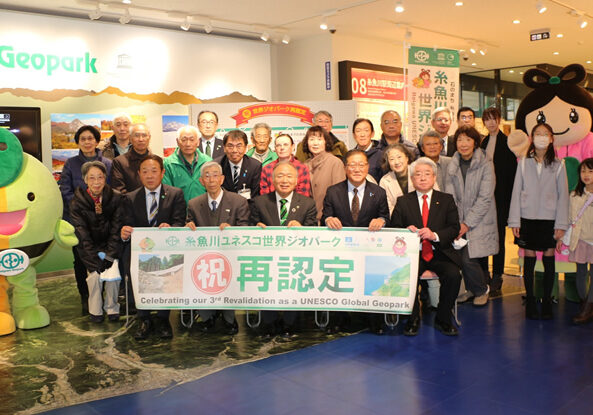
History of the Itoigawa Geopark
Trace the journey and milestones of Japan's First Geopark―from local vision to global recognition.
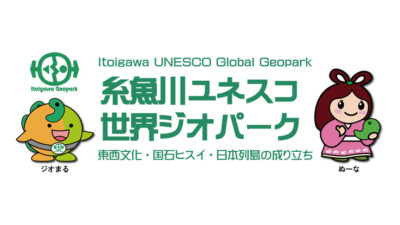
Mascot Characters, Logo & Geopark Branding
Learn more about our mascots, Geomaru & Nuna, as well as our logo and branding.