Miyama Park and Museums Area
Geopark Information Center
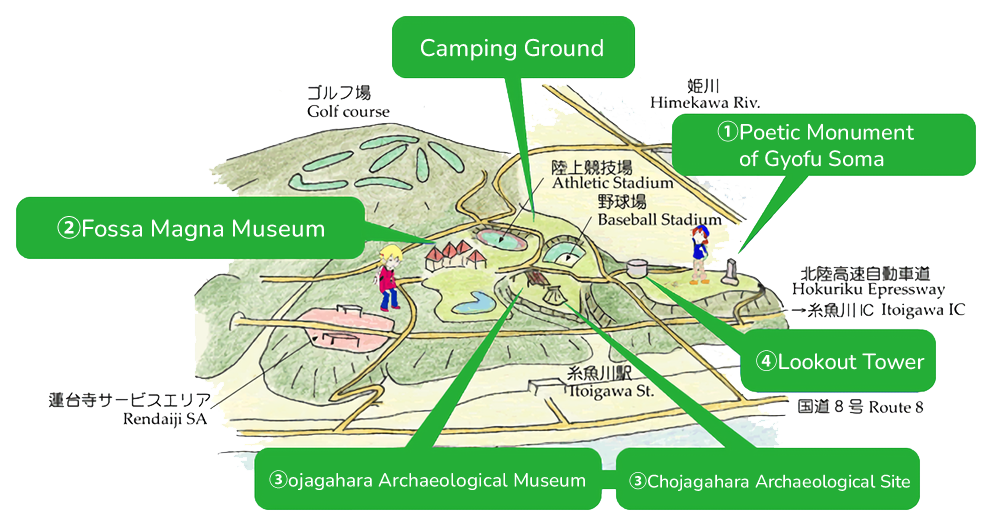
Atop a terrace carved by the Himekawa River lies Miyama Park. This large park features museums like the Fossa Magna Museum and Chojagahara Archeological Museum, the Chojagahara Archeological Site (A Nationally Designated Historical Site), sports and recreation facilities, and a campground.
Fossa Magna museum hosts a number of exhibits about the formation of the land around us and various interesting minerals from Itoigawa and around the world, as well as information about Itoigawa Geopark. At Chojagahara Archeological Museum, jade and other artifacts unearthed from the nearby archeological site are on exhibit. Any trip to Itoigawa Geopark should start here with these museums, where you can learn more about all 24 of our geosites.
At Chojagahara Archeological Site, a Jomon period village has been partially restored with 5 dwellings and a natural spring that supplied the area with fresh water. Near this village is also a workshop where you can learn firsthand about Jomon period life by making magatama and earthenware pottery.
1Miyama Park & Gyofu Monument
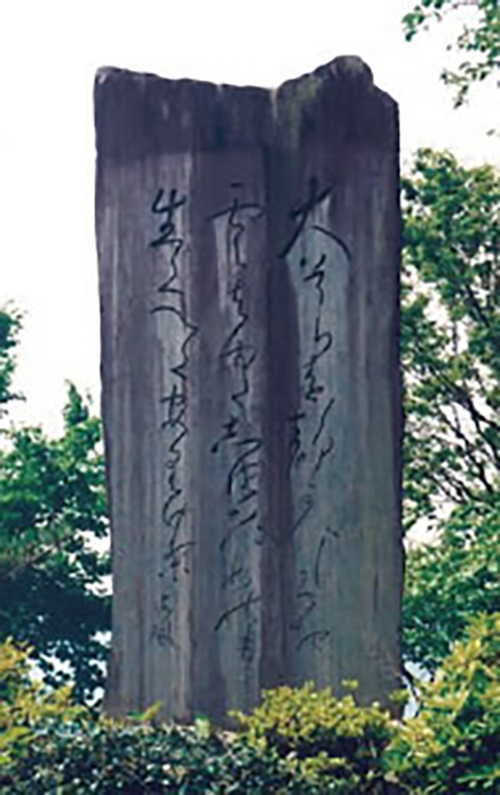
Gyofu Souma Poetic Monument
Miyama Park is located on a wide river terrace formed by the Himekawa. The park houses a large number of recreation and leisure facilities including a public garden which is famous for its cherry blossoms in spring.
On the western edge of the park is a stone monument on which a poem is carved. This poem was written by Gyofu Soma, a famous poet and writer who was born in Itoigawa. It reads:
Tairiku wo shizuka ni shiroki kumo ha yuku
Shizuka ni ware mo iku beku arikeri
White clouds move peacefully onto the shore
So too have I moved peacefully through life
This poem expresses Soma's thoughts on his way of life.
2Fossa Magna Museum
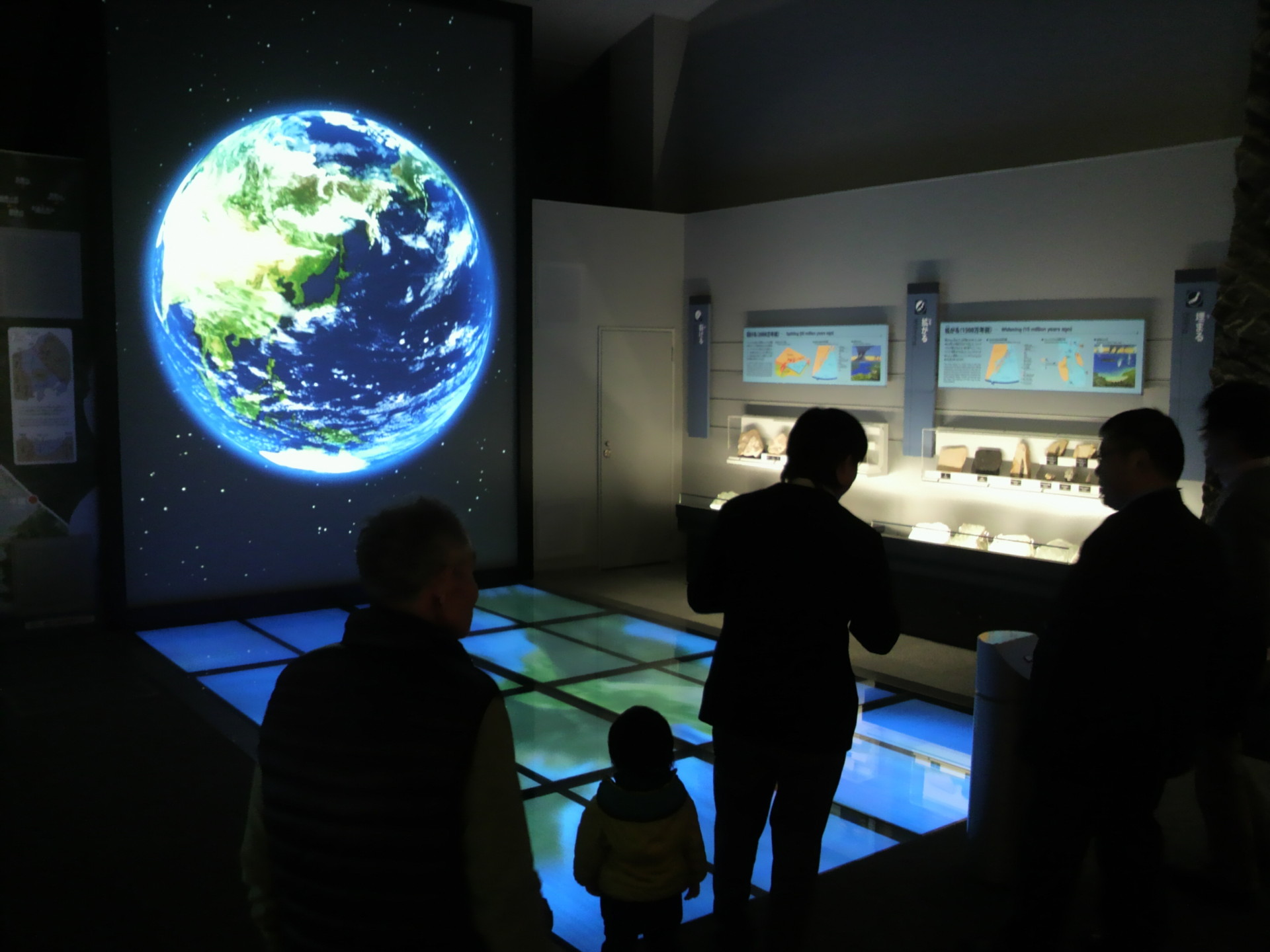
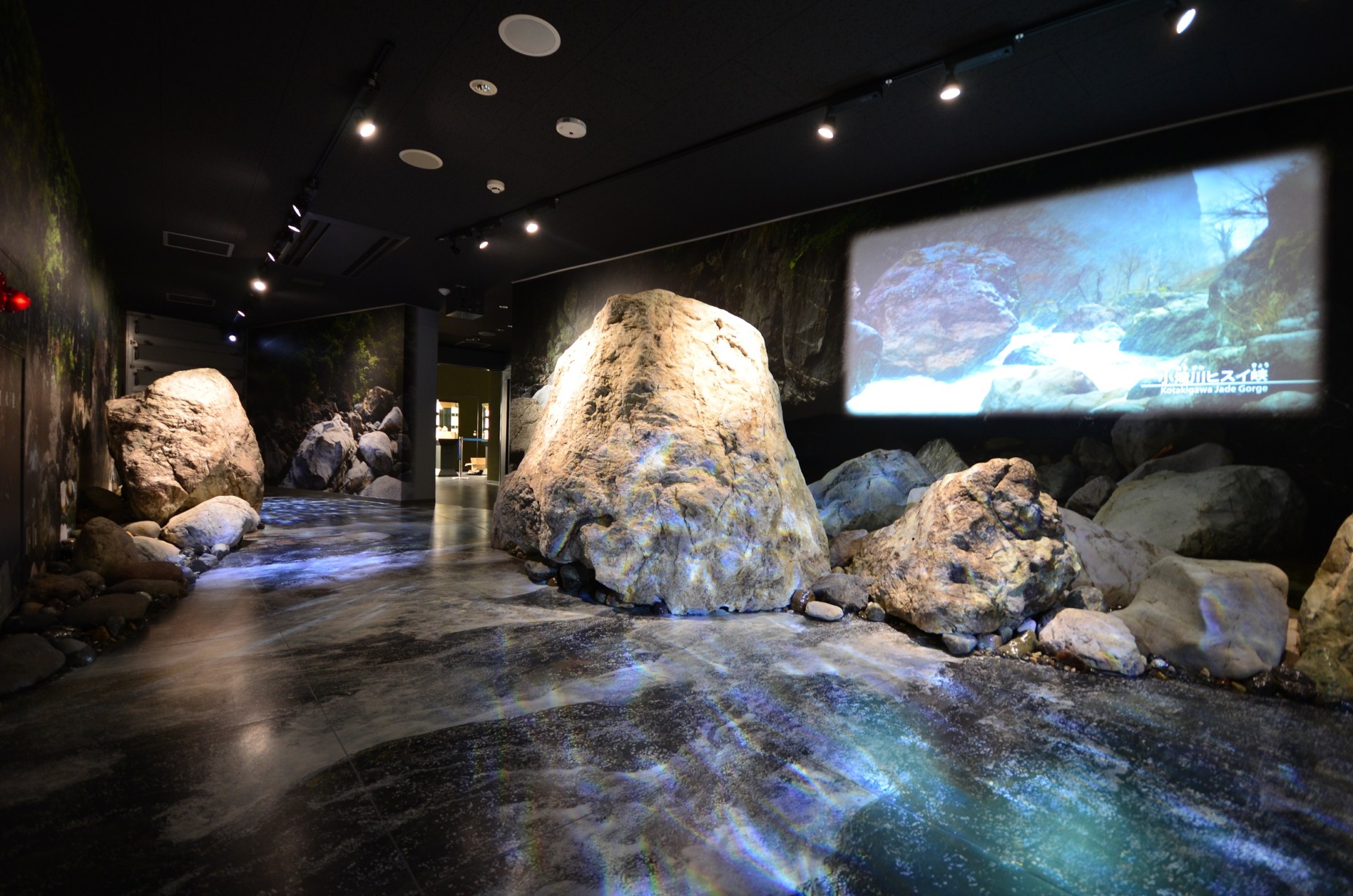
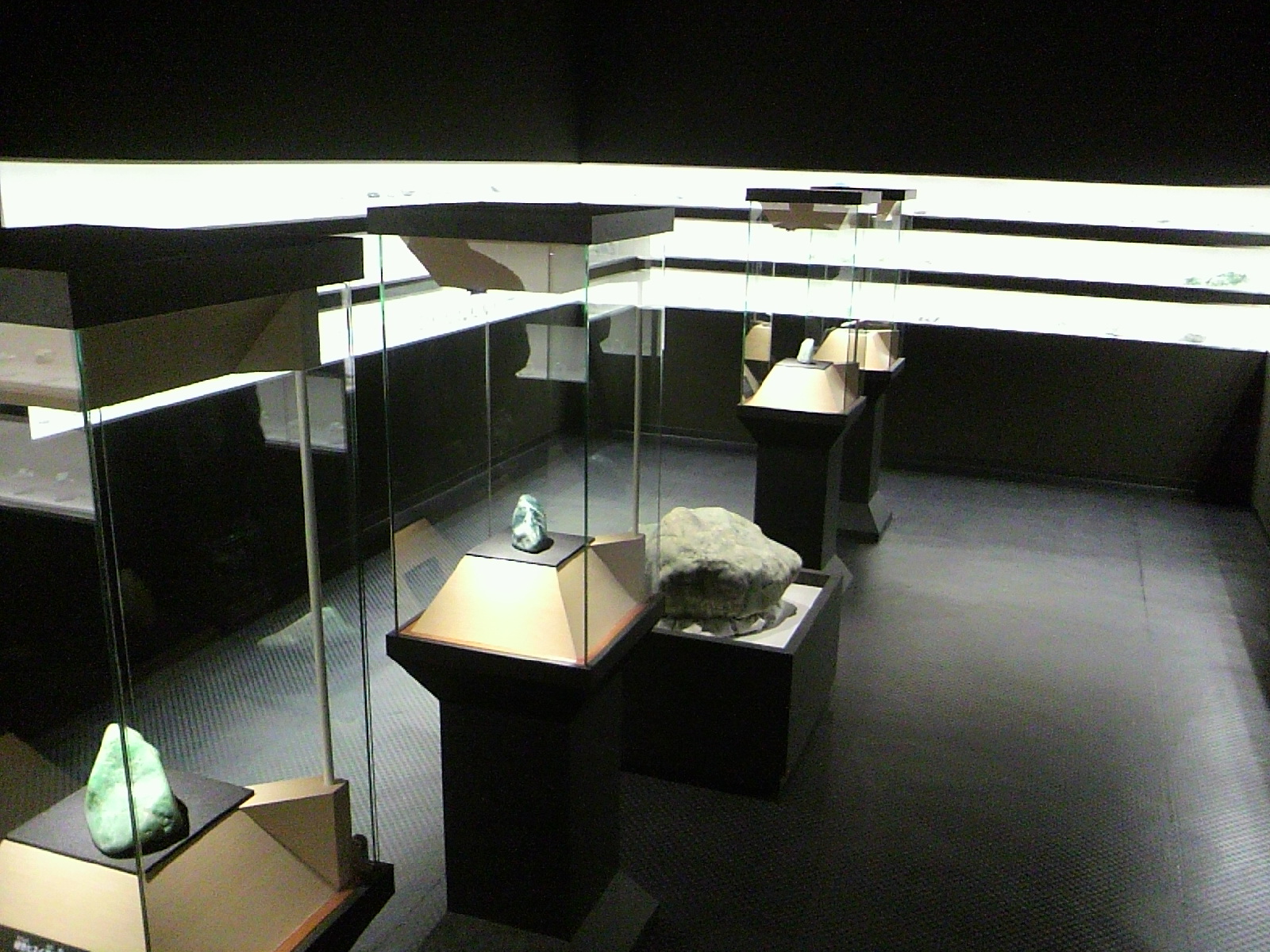
Discover how the Japanese Islands formed at this award-winning museum featuring exhibits of Itoigawa’s jade and other minerals and fossils. You can also try your hand at fossil hunting at the Fossil Valley exhibit. Be sure to check out the Geopark Information Center as well for information about the Itoigawa UNESCO Global Geopark!
3Chojagahara Archeological Museum and Chojagahara Archeological Site
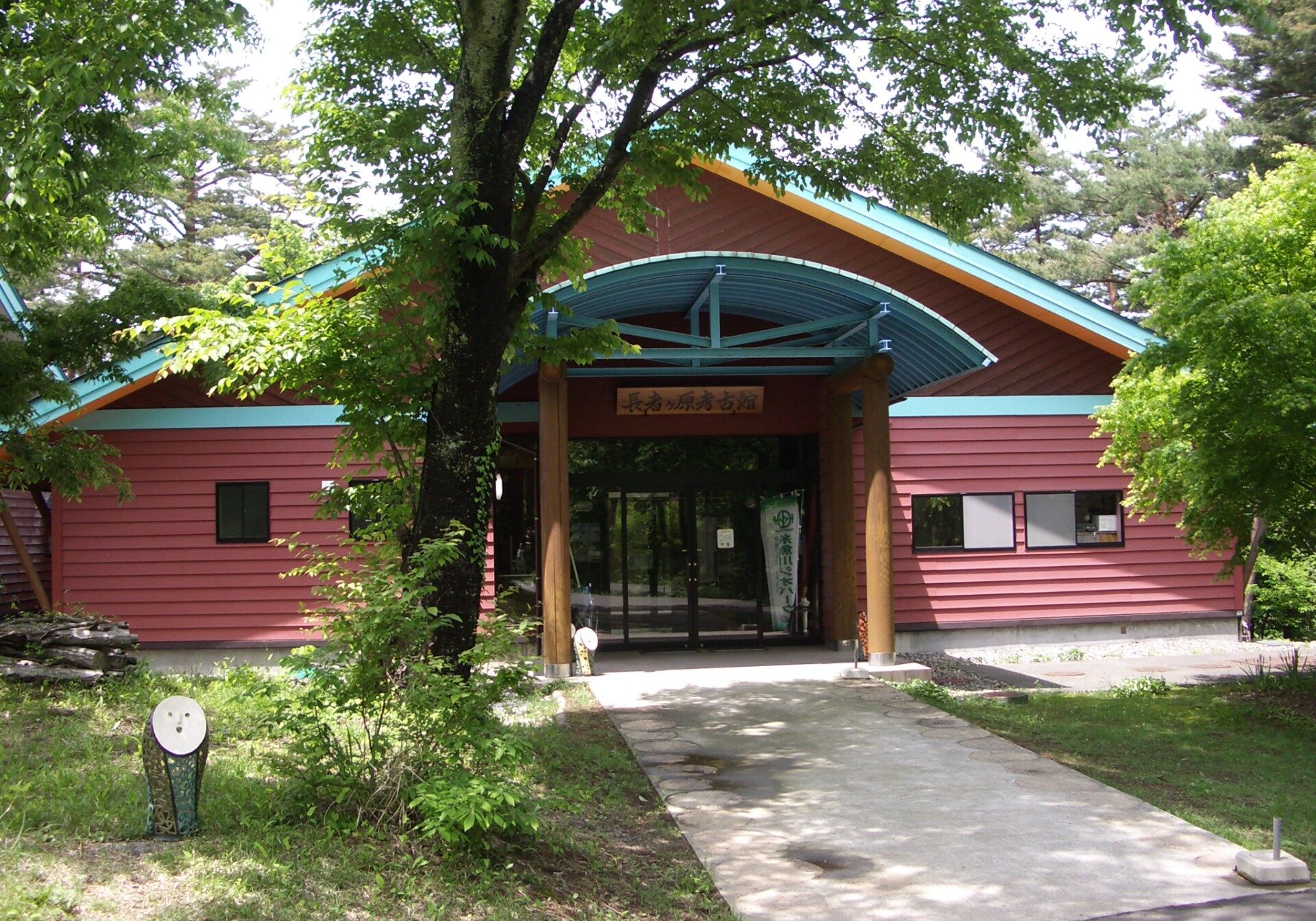
Chojagahara Archaeological Museum
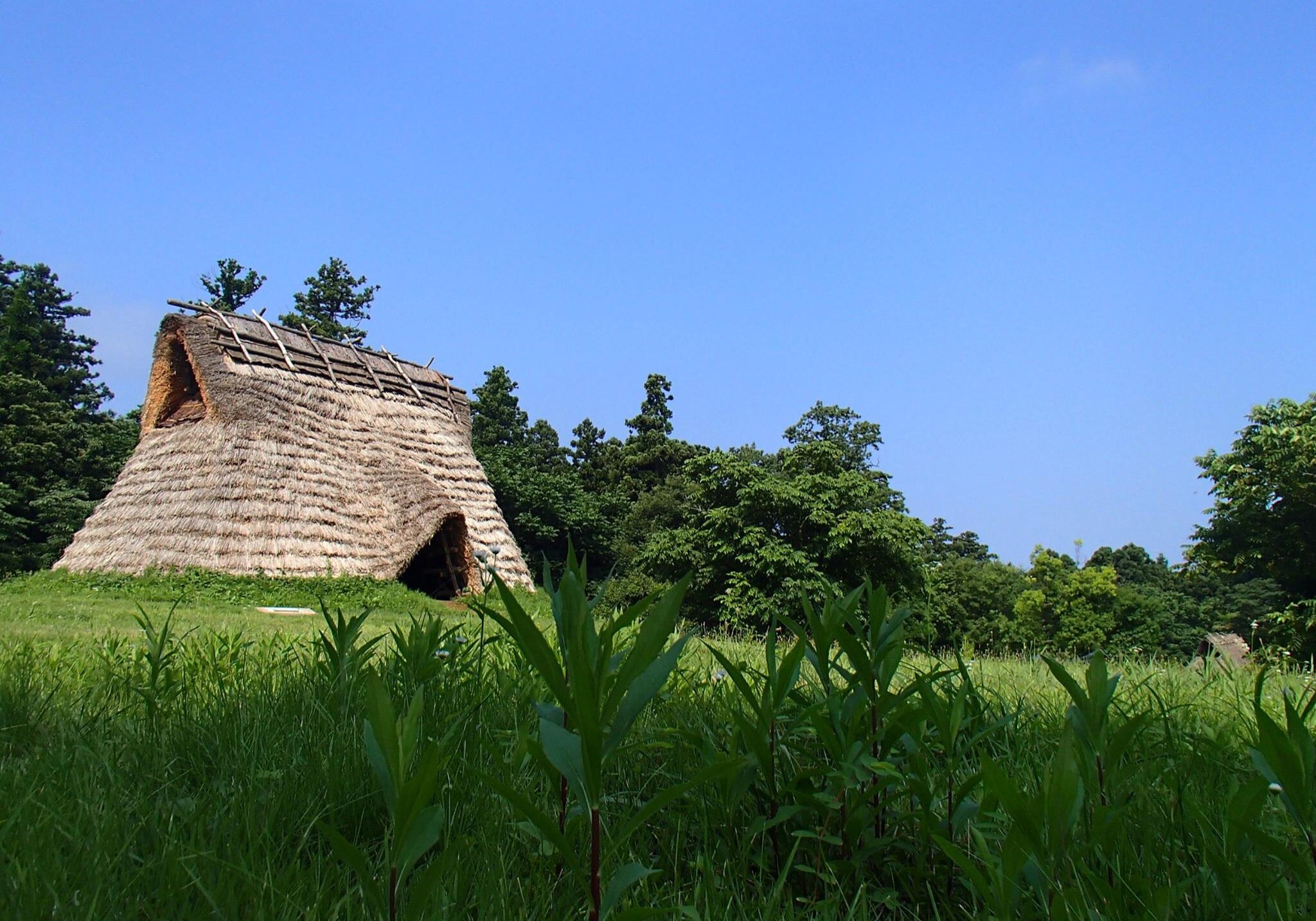
Chojagahara Site
Warning: file_get_contents(https://geo-itoigawa.com/wp-content/uploads/2023/06/長者ケ原遺跡02.jpg): Failed to open stream: HTTP request failed! HTTP/1.1 400 Bad Request in /home/users/2/omweb/web/new_itoigawa/wp-includes/class-wp-image-editor-imagick.php on line 250
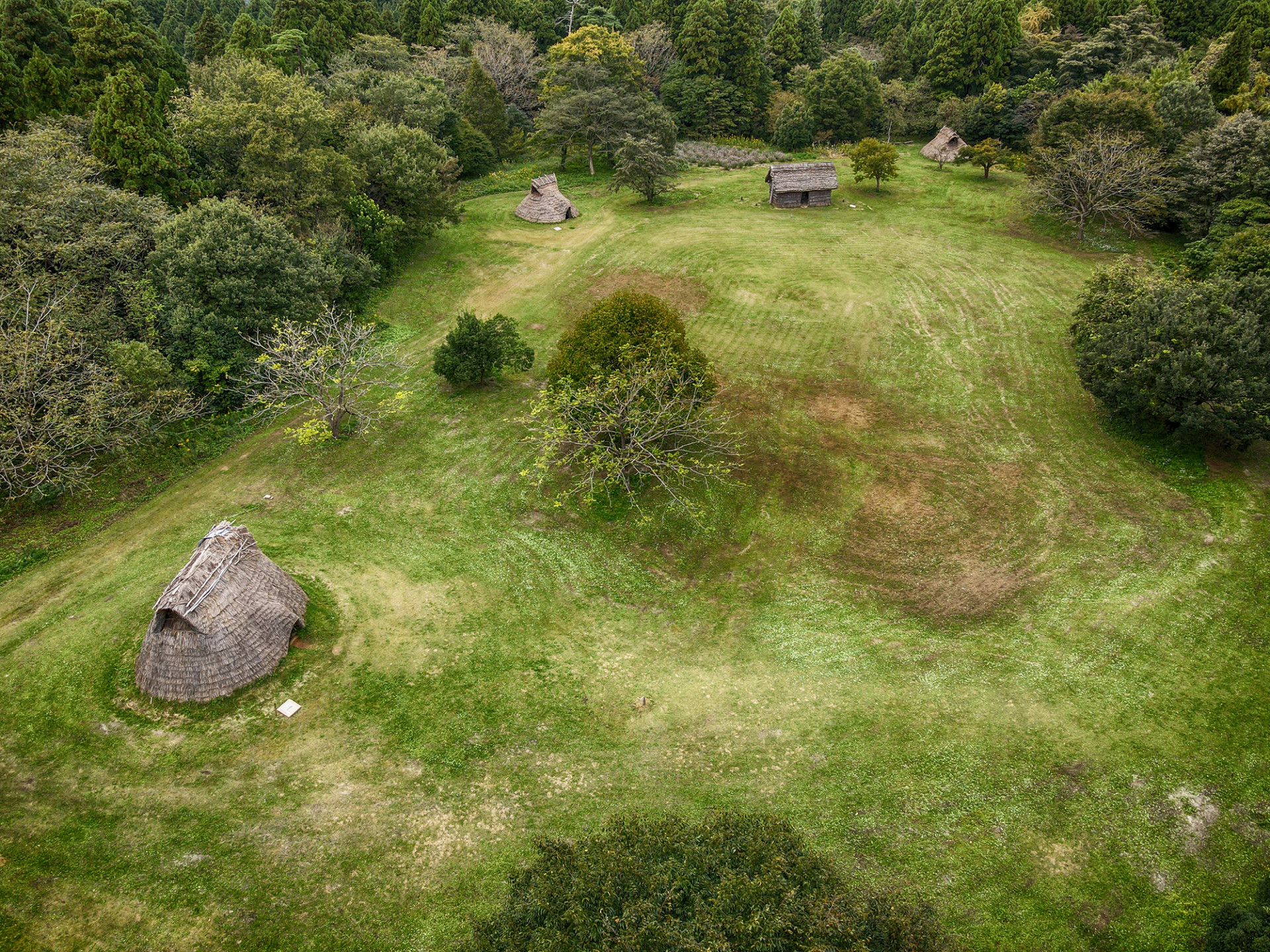
Chojagahara Site
The world’s oldest jade culture flourished at the nearby Chojagahara Archaeological Site over 5000 years ago. Today, this site is preserved as an Archaeological Park with reconstructions of the dwellings used by the Jomon people. Learn more about the lives of the Jomon people and how they traded beads made of Itoigawa jade throughout Japan at the Chojagahara Archaeological Museum
4Lookout Tower
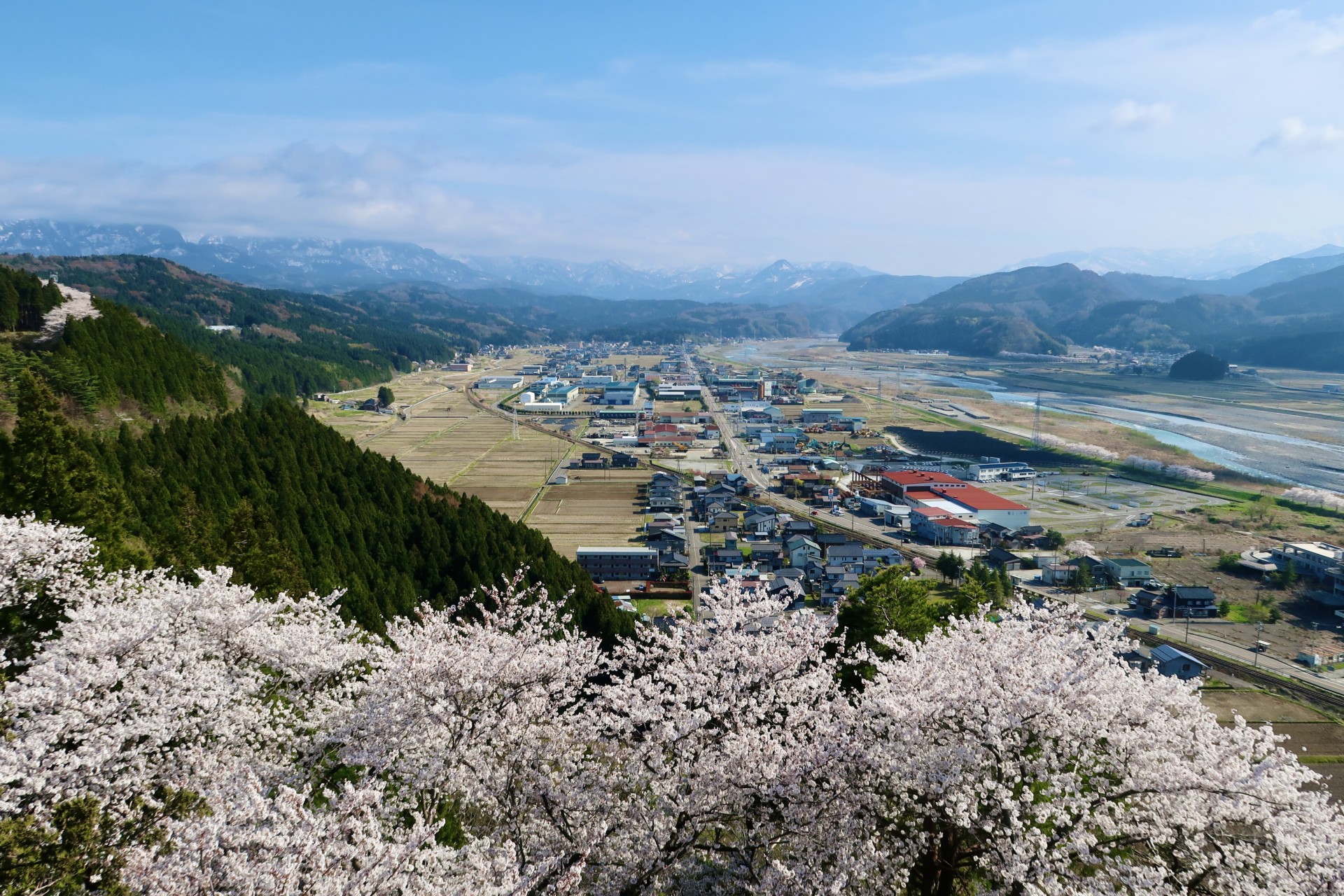
This 18 m tall water tower features a lookout point with breathtaking views of the nearby Himekawa River Valley, Kubiki Mountains and Northern Alps. On the north side you can also see Itoigawa City, the Sea of Japan and, with a little luck and a clear day, distant Noto Peninsula. It’s an excellent place to see and understand the topography of Itoigawa Geopark and the Fossa Magna’s western boundary.
Dr. Heinrich Edmund Naumann
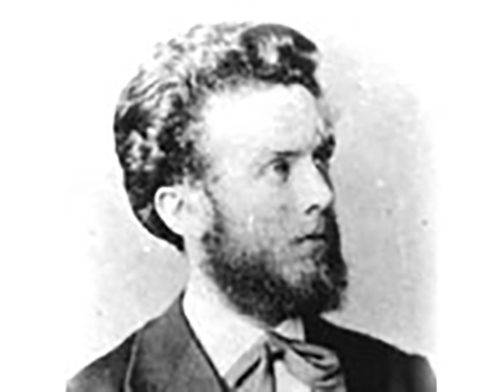
Known as the “The Father of Japanese Geology,” Dr. Naumann performed the first geological survey of Japan. It was during this survey he discovered a massive geological depression he named the “Fossa Magna.” Learn more about him and his achievements at the Fossa Magna Museum.
The Sea of Japan Classic Car Review
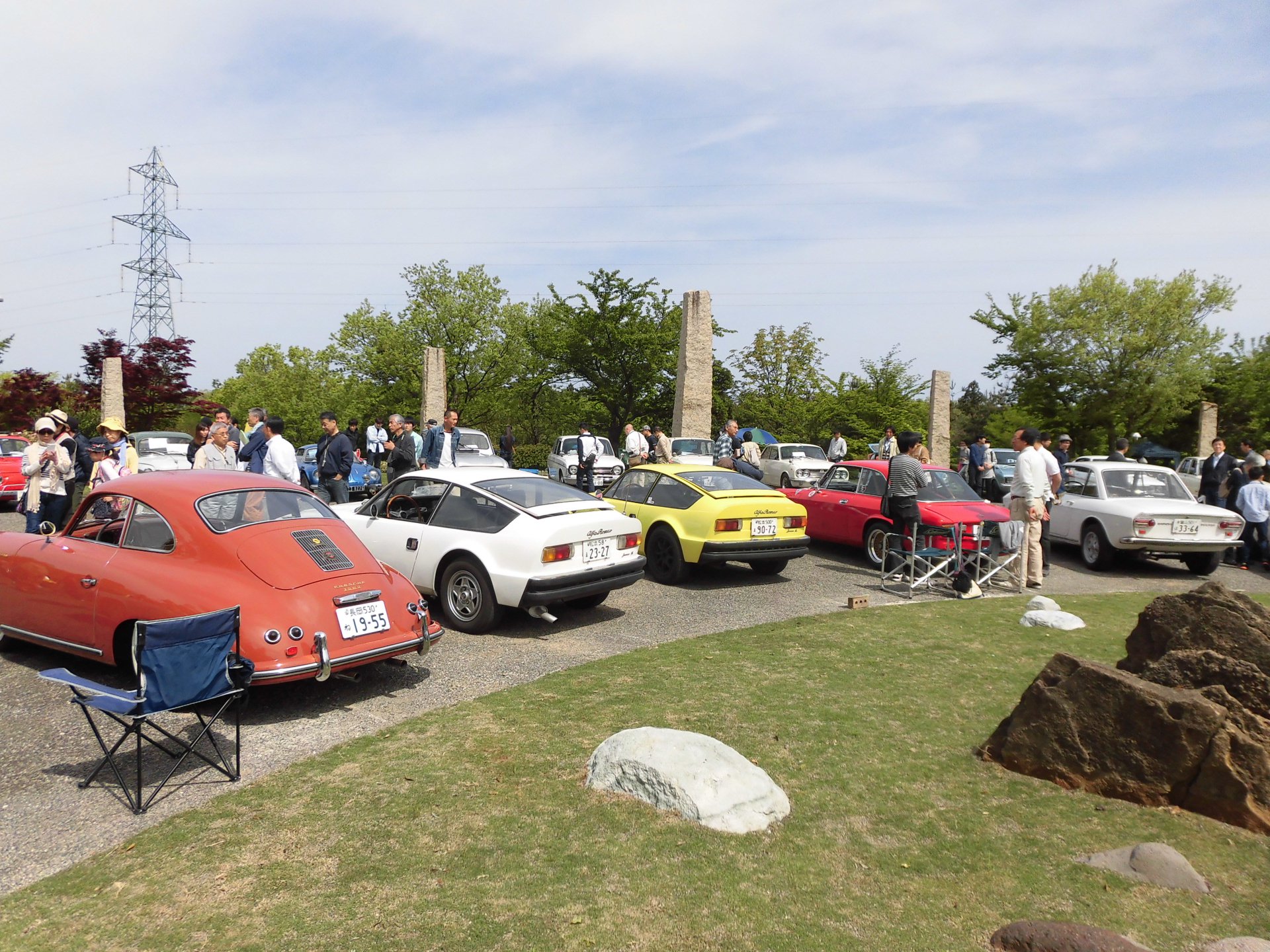
Every September, the Fossa Magna Museum hosts the Sea of Japan Classic Car Review. Over 200 classic cars visit each year from across the country, giving the owners a chance to show off their prized cars and meet with other classic car owners. The event is marked with a number of special exhibitions, including a special parade of classic cars through downtown Itoigawa.
Area Access & Closures
No access alerts.

